I have great conversations with designers and design leaders almost daily now.
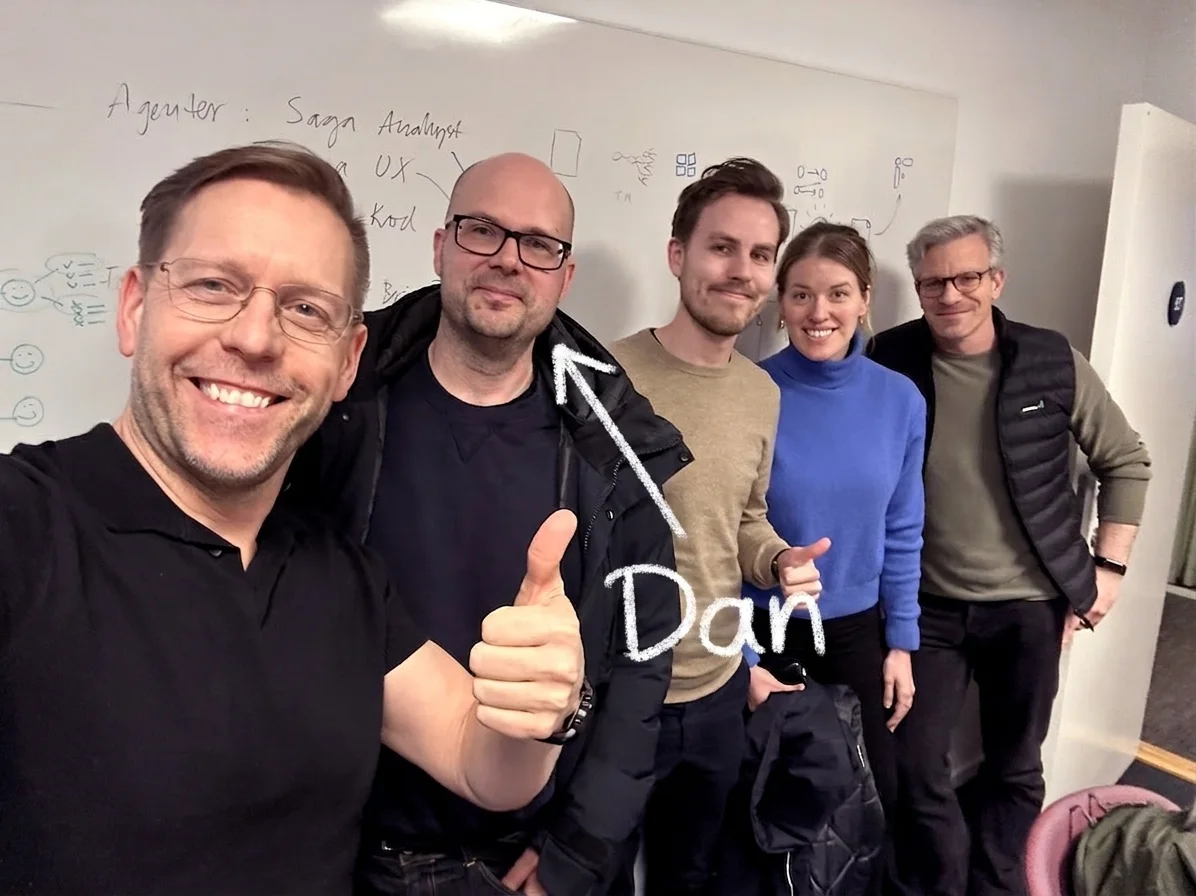
A few days ago I had the pleasure of speaking with Simon Eriksson from ICA’s Design Experience Team, one of Sweden’s biggest design teams. We discussed their explorative work with agentic design and my work with Open Source Design Agents.
We are all wrestling with the same questions right now.
We shared our viewpoints on everything agentic: Figma libraries, Storybook, Tailwind, GitHub-connected design pipelines. And how a serious, mature design organization differs from solo building with AI.
It struck me that we’re all asking pretty much the same three questions I hear from solo operators:
- When do you wireframe, when do you open Figma, and when do you go straight to code?
- Who owns the design system once the product evolves?
- How do you bridge the gap when a new designer should take the step into agentic work without stopping the work?
The realization I keep having in these conversations: the tools are almost always good enough. The gap is usually one step earlier. Before the design process even starts.
WDS adds some really important pieces of the puzzle
I don’t know all the answers, not by a long shot, but it seems like some parts of Whiteport Design Studio, the official UX framework for the BMad method, might provide a few really important pieces to the puzzle that Simon, I, and other brave designers and design leaders are working hard to solve right here.
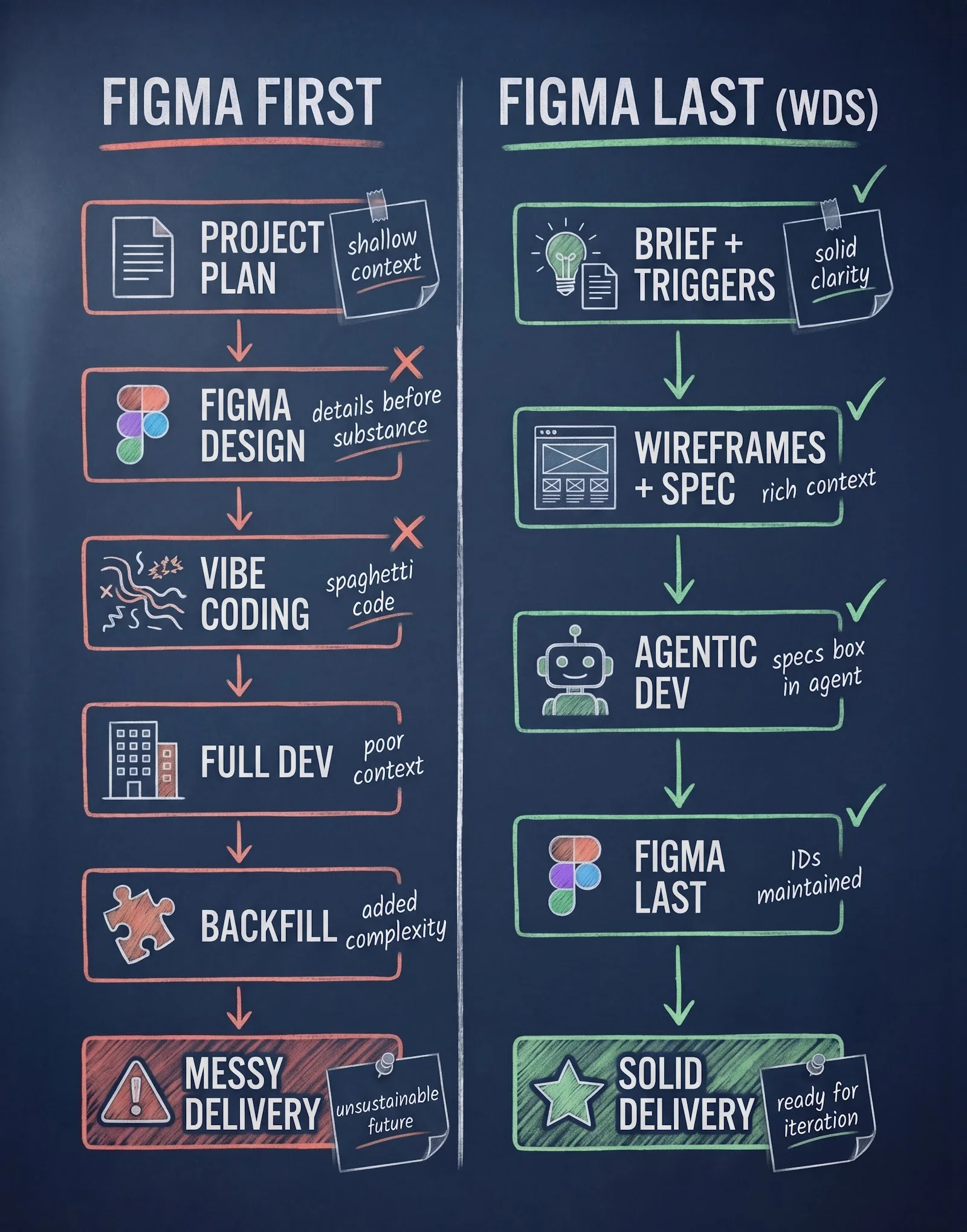
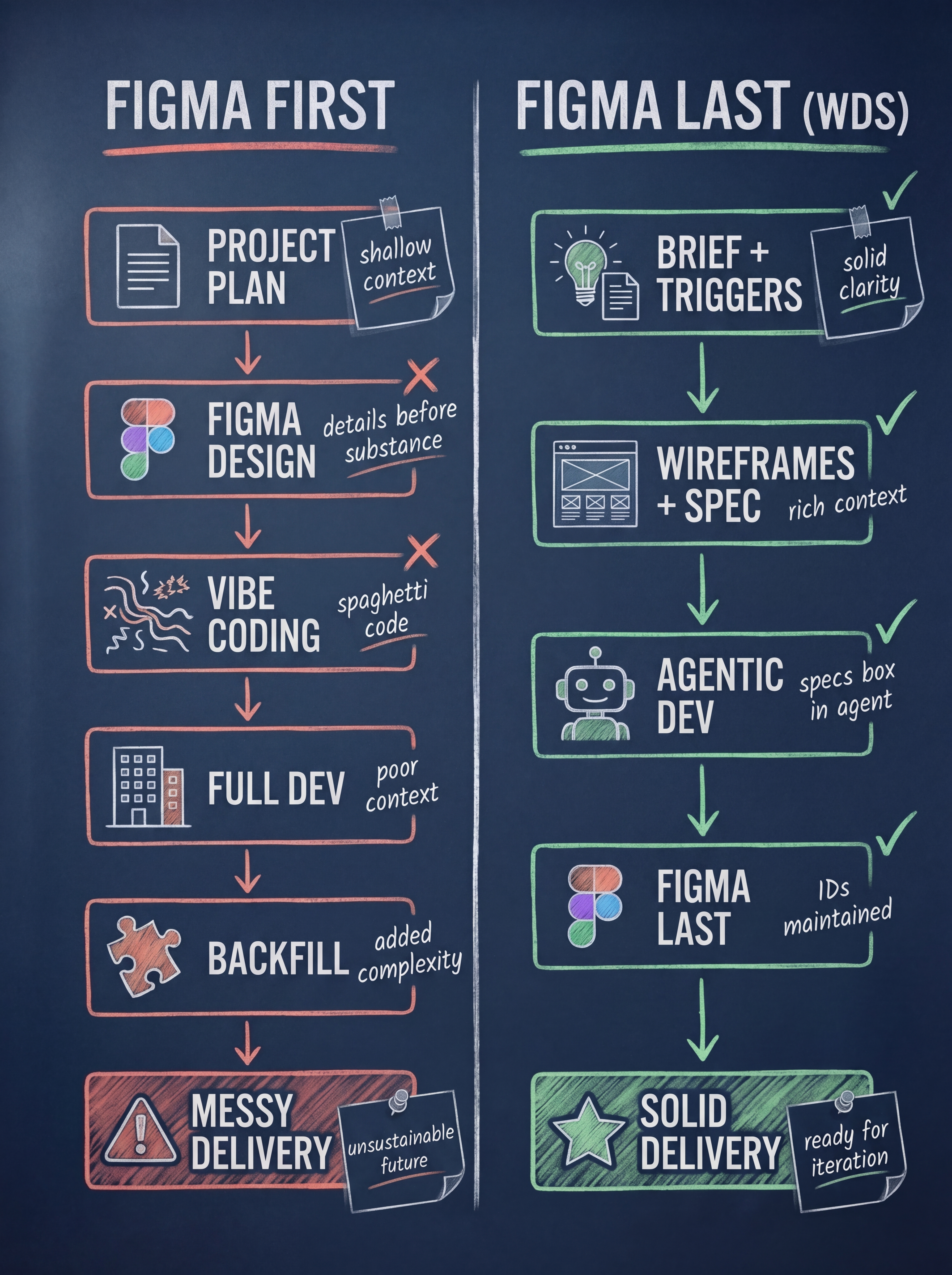
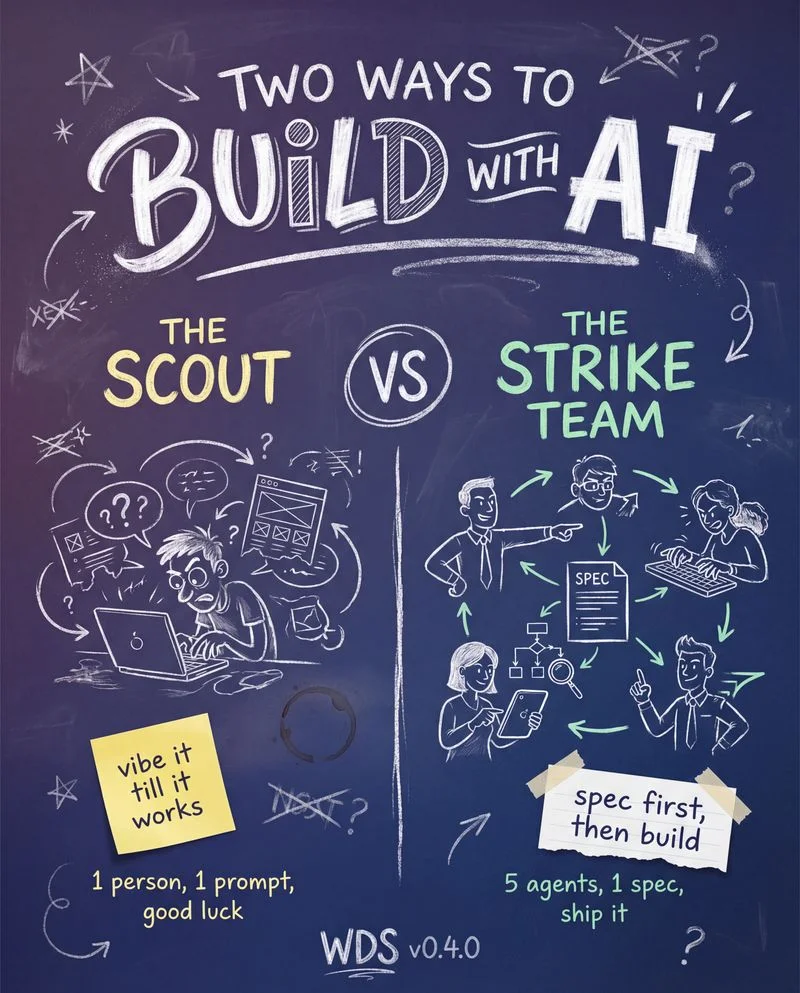
The WDS experience: you need to flip the script for agentic design to suddenly make sense.
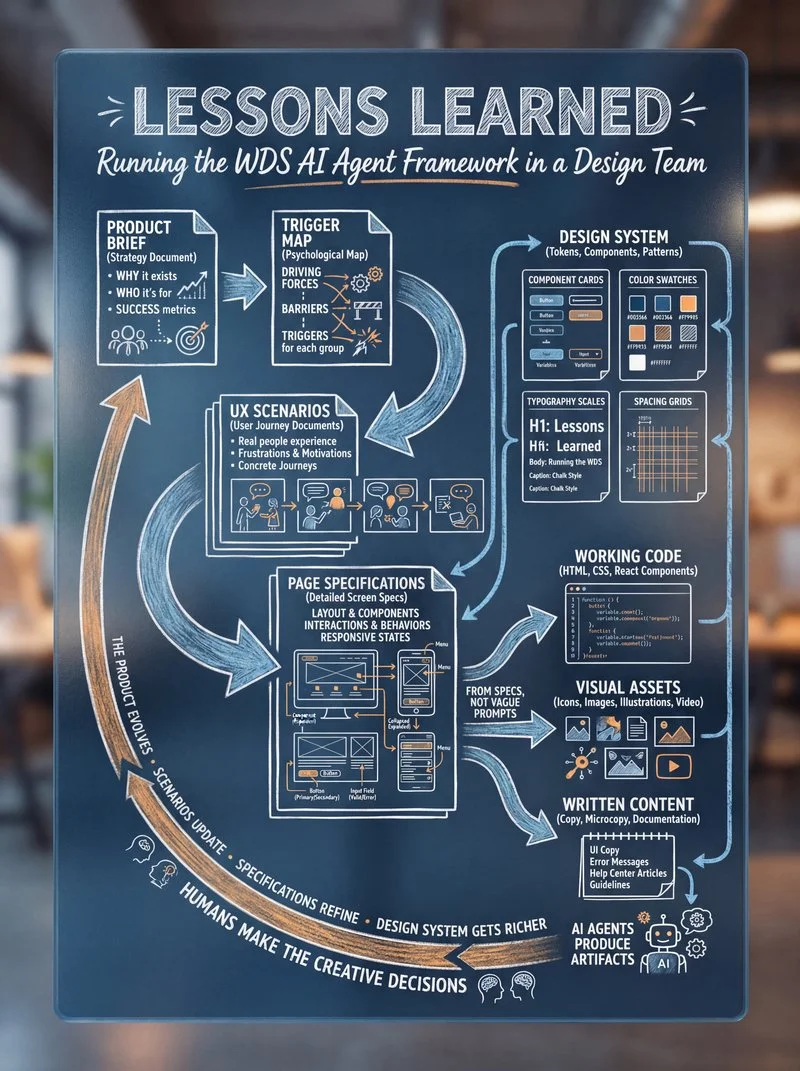
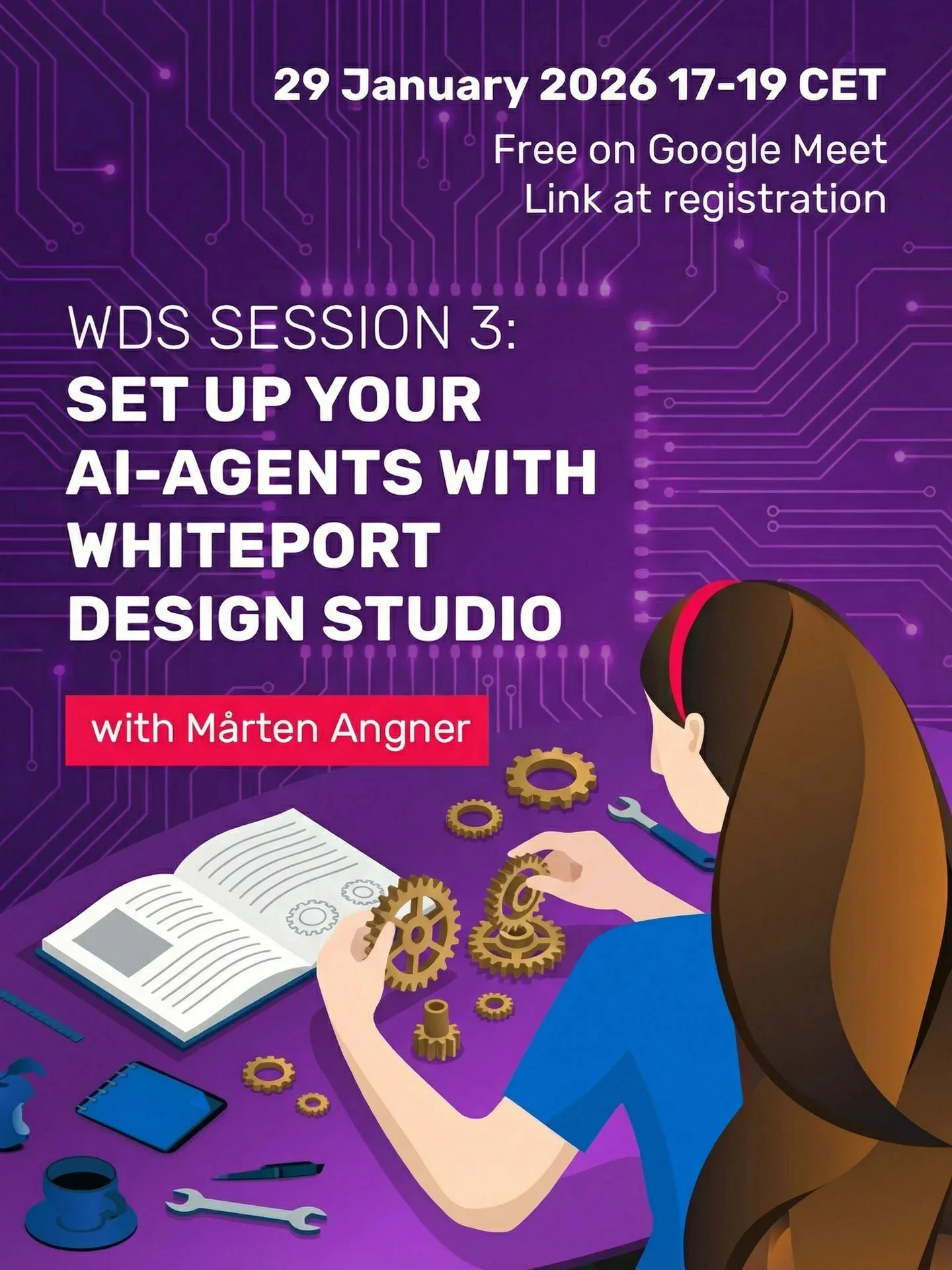
If you missed WDS, it’s a free, open-source UX framework for the BMad method. It gives design teams shared phases: Product Brief, Trigger Map, UX Scenarios. So AI agents and humans speak the same language. The project starts in code, from vision to design to code all in the same environment shared with everyone in the team.
The design process moves into the Git repo. Strategy in markdown. Wireframes, design, and specs with the content and error states already written. Design system in code. Figma becomes less of a bottleneck, opened only for what the design system doesn’t yet cover. Agents work autonomously for longer stretches. AI agents and humans read the same source. The work moves from idea to live software because no one needs to hold the context in their head.
With WDS, it works the same whether you’re a solo designer or a team of fifty.
Are you a designer or a design leader in a larger organization? Do the gaps and the challenges sound familiar? Please reach out, I’d love to compare notes!
Read more
- Whiteport Design Studio (WDS), the official UX framework for the BMad method. Free and open source.
- BMad Method, the agentic development framework WDS is built on.
- Agentisk design kräver inte bättre verktyg. Det kräver nytt ledarskap., a previous piece on what leadership needs to change to make agentic design work.
- Figma first is killing your agentic design workflow., the case for putting Figma last.